Chandrayaan-3, India's Moon lander and rover
What is Chandrayaan-3?
Chandrayaan-3 is the third Moon mission by India’s space agency ISRO. The goal is to place a lander and rover on the lunar surface and operate them for roughly one lunar day, or 14 Earth days. The small rover, which weighs just 26 kilograms (57 pounds), will fly to the Moon inside the lander. Both vehicles are equipped with science instruments to study the surface.
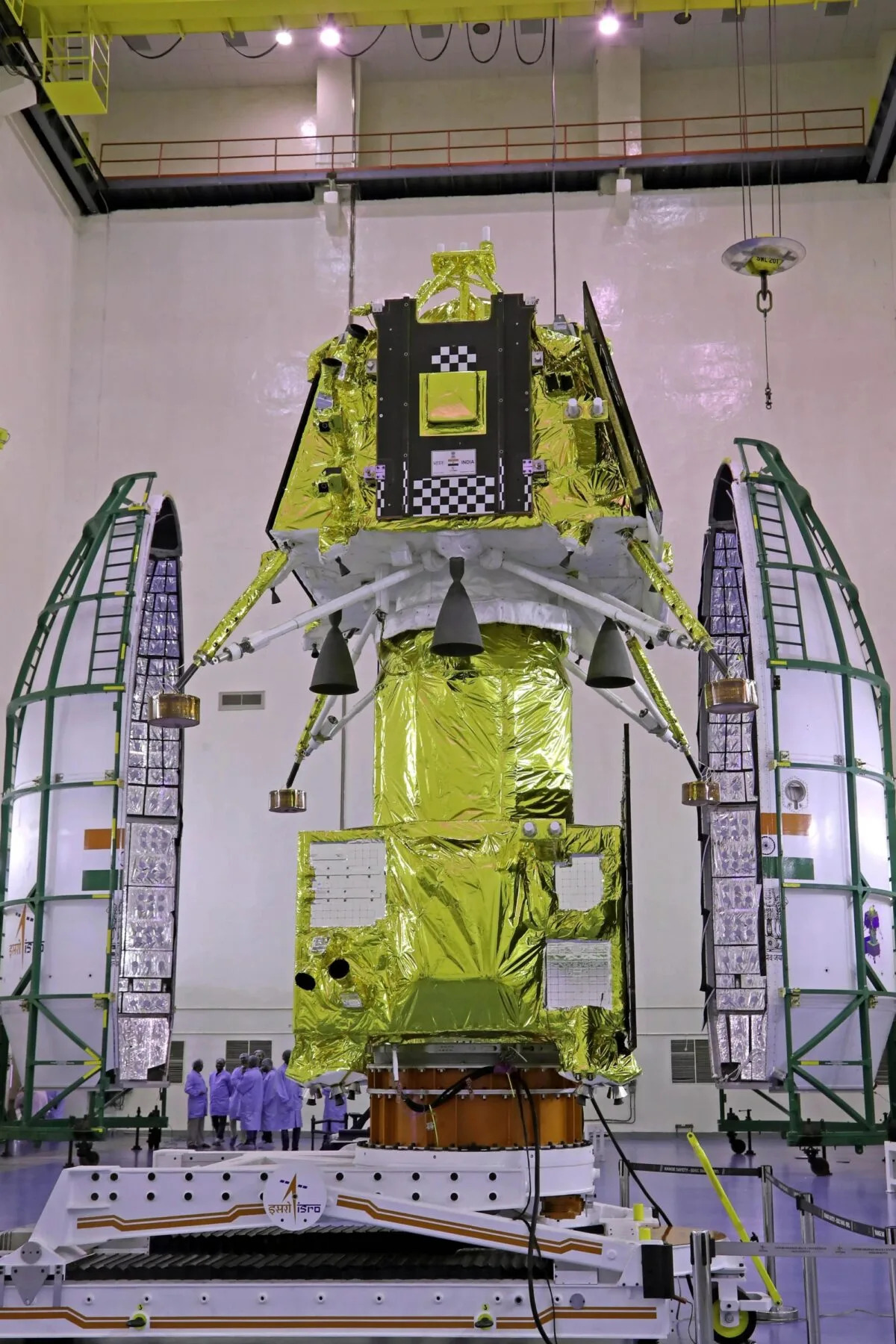
LAUNCH VEHICLE INTEGRATION The Chandrayaan-3 lander, with its rover inside, sits atop the propulsion module that will carry it to lunar orbit. The rocket’s protective aeroshell fairings, which protect the spacecraft during launch and ascent, can be seen in the background.Image: ISRO
The Chandrayaan-3 lander and rover are similar in design to those from the Chandrayaan-2 mission. In September 2019, the Chandrayaan-2 Vikram lander successfully lowered itself to within 5 kilometers (3 miles) of the Moon, entering a “fine braking” mode that would have placed it gently on the lunar surface. Like its successor, Chandrayaan-2 was targeting the Moon’s south polar region, where ice has been found inside permanently shadowed craters.
Unfortunately, a software glitch caused Vikram to veer off course, and ISRO officials lost contact with the spacecraft. NASA’s Lunar Reconnaissance Orbiter later found debris from the vehicle scattered about 750 meters (a half mile) from the intended landing area.
The mission was not a total loss: Chandrayaan-2 also included an orbiter that continues to study the Moon from above. Among other scientific functions, the orbiter is equipped to scan for water ice.
Having figured out what doomed the Vikram lander, ISRO says they have upgraded the lander’s software and performed numerous tests to ensure that Chandrayaan-3 goes according to plan. Chandrayaan-3 does not include an orbiter, although the propulsion module that will carry the lander to lunar orbit is equipped with a science instrument that will observe Earth as if it were an exoplanet, providing data for future exoplanet studies.
How will Chandrayaan-3 get to the lunar surface?
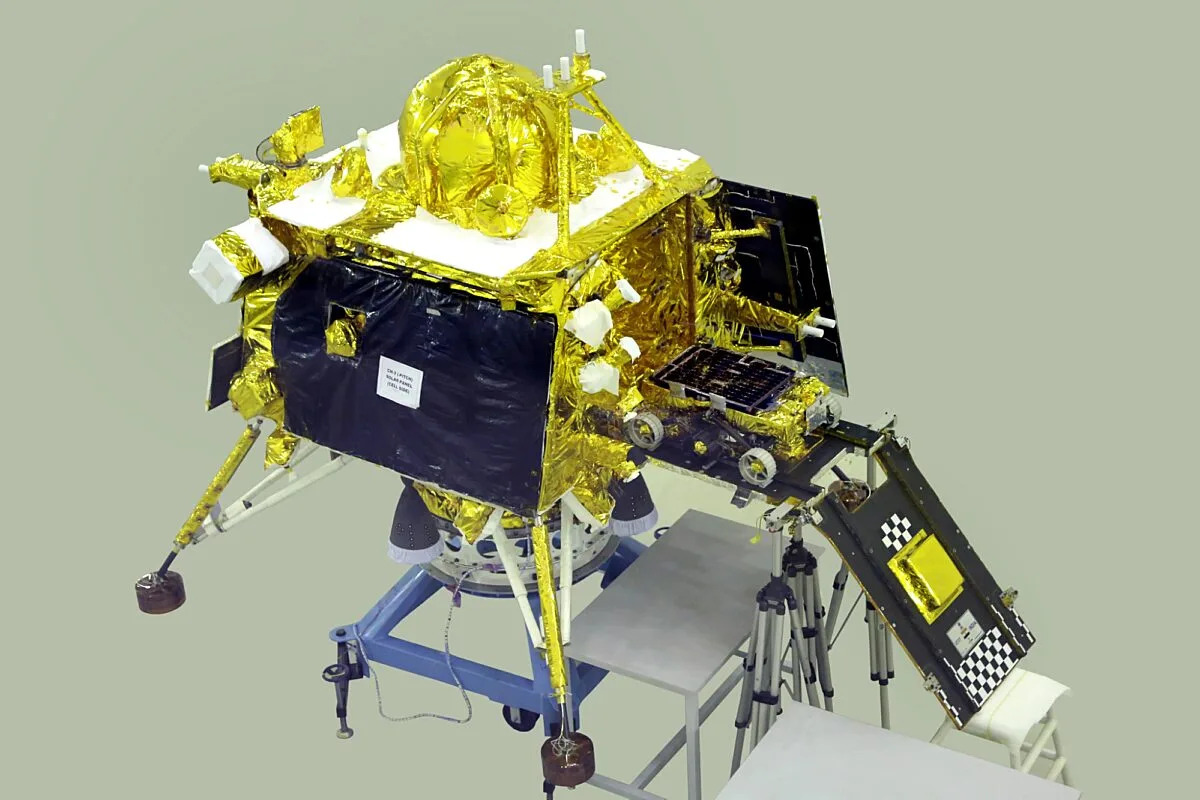
CHANDRAYAAN-3 LANDER AND ROVER ISRO’s Chandrayaan-3 lander is seen here with its ramp unfolded, revealing a small rover that will drive on the lunar surface.Image: ISRO
From liftoff to touchdown, it will take about 40 days to place Chandrayaan-3 on the lunar surface.
The mission began on July 14 with a launch aboard India’s LVM3 rocket, the country’s heavy lift vehicle capable of placing about 8 metric tons into low-Earth orbit. (For comparison, the SpaceX Falcon 9 rocket can lift almost 23 metric tons to low-Earth orbit.)
The LVM3 will place the spacecraft and an attached propulsion module into an elongated Earth orbit with an apogee, or high point, of about 36,500 kilometers (22,700 miles) above the planet. The propulsion module will raise its orbit several times before transferring into lunar orbit.
At the Moon, the propulsion module will lower Chandrayaan-3 until it reaches a circular, 100-kilometer (62-mile) orbit. There, the two vehicles will separate, leaving the lander to deorbit and touch down in the Moon’s south polar region. At the moment of contact, the lander should be moving less than 2 meters per second vertically, and 0.5 meters per second horizontally (6.5 and 1.6 feet per second, respectively).
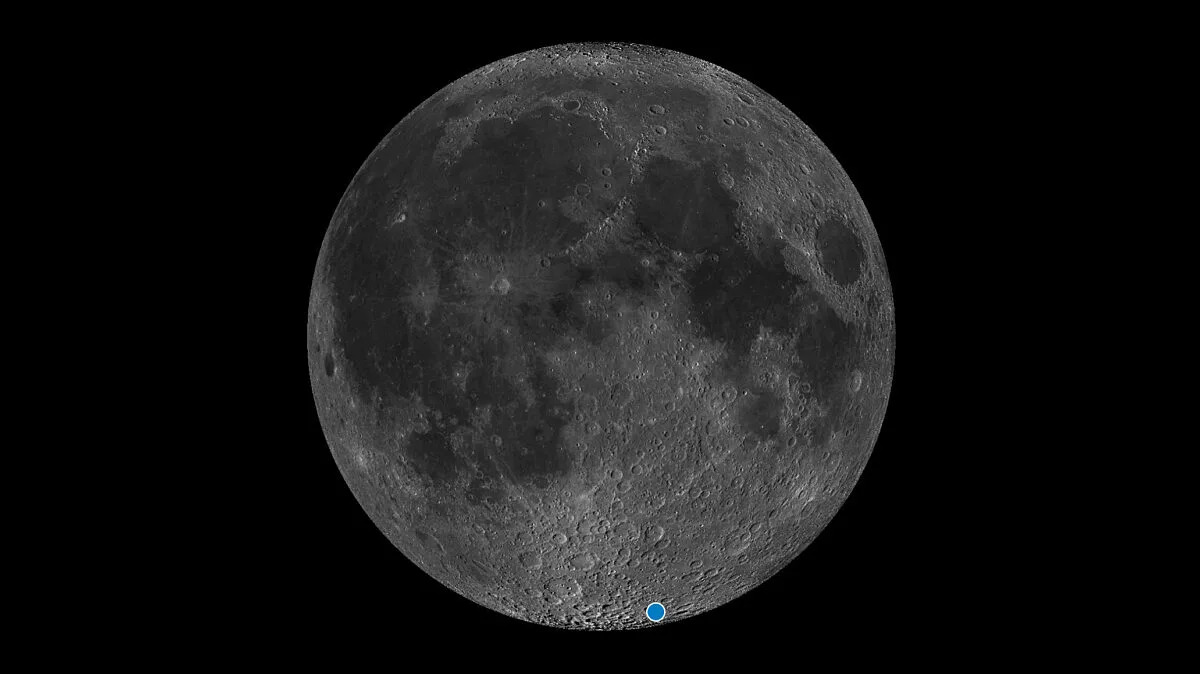
CHANDRAYAAN-3 LANDING SITE The Chandrayaan-3 prime landing site is in the south polar region, near the bottom-right of the Moon as seen from Earth.Image: NASA / ASU / ACT / Lunar Quickmap / Jason Davis / The Planetary Society
What will Chandrayaan-3 do on the Moon?
A successful touchdown will mark a huge achievement for ISRO, placing them in a small group of nations that have landed spacecraft on other worlds. Beyond this milestone, Chandrayaan-3 has technologies to demonstrate and science to perform.
Shortly after landing, one side panel of the Chandrayaan-3 lander will unfold, creating a ramp for the rover. The rover will emerge from the lander’s belly, drive down the ramp, and begin exploring the lunar environment.
The solar-powered lander and rover will have about two weeks to study their surroundings. They are not designed to survive the chilly lunar night. The rover can only communicate with the lander, which communicates directly with Earth. ISRO says the Chandrayaan-2 orbiter can also be used as a contingency communications relay.